
Short answer
Renovate an older Dublin house from the outside in and the top down: make the roof, rainwater goods and external walls watertight first, resolve damp at its source, then rewire and replumb, then insulate and ventilate, and only then plaster, tile and fit kitchens and bathrooms. Reversing that order is why finished rooms get opened up again.
Key points
- Water first: roof, gutters, downpipes, flashings, external render.
- Diagnose damp before covering anything — rising, penetrating and condensation differ.
- First fix electrics and plumbing before insulation and plaster.
- Ventilation is designed at the same time as insulation, not afterwards.
- Kitchens and bathrooms go in last, when the shell is dry and stable.
Start with a survey you can act on
Older houses hide their problems. A proper survey looks at the roof structure and covering, the state of the render and pointing, floor construction, drainage, the electrical installation, and any evidence of movement. It gives you a scope of works instead of a wish list, and a budget with a genuine contingency.
In a Dublin house of any age, drainage and rainwater goods are worth particular attention. A blocked gully or a leaking downpipe behind a rendered wall causes damage that looks structural and is actually plumbing.
Water, then damp, then services
Every one of these is cheaper to do while access is open. The most expensive renovation is the one where a finished room is stripped back six months later because the source of a stain was never found.
- Repair or replace roof coverings, flashings, fascia, soffit and rainwater goods.
- Repair external render and pointing; deal with ground levels and gullies.
- Identify whether damp is rising, penetrating or condensation before treating it.
- Rewire and replumb while walls and floors are open.
- Upgrade the heating system after the fabric plan is settled.
Insulation and ventilation belong together
Insulating an old house changes how moisture moves through it. Whether you insulate externally, internally or in the roof, the ventilation strategy has to be designed at the same time — background ventilation to habitable rooms, extract to kitchens and bathrooms, and no unvented cold spots left behind furniture.
This is also the point to think about airtightness and about the sequence of a wider energy upgrade, so that grant-supported measures are carried out in an order that works rather than one that suits the calendar.
Finishes last, snagging properly
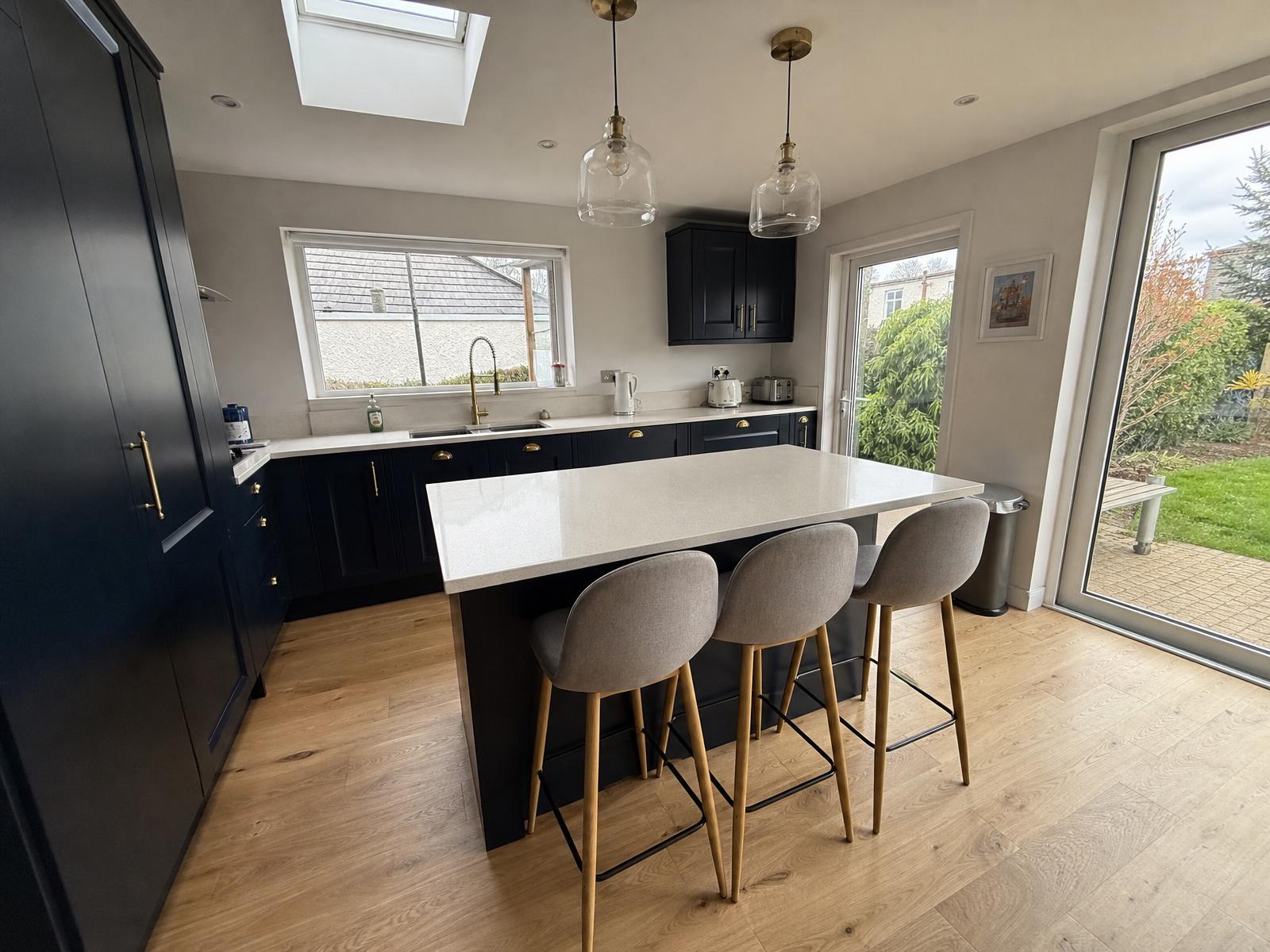
Plaster, floors, joinery, tiling, kitchens, bathrooms and decoration come at the end, when the shell is dry. Allow drying time for new plaster and screeds before floor coverings go down, and walk the house with the contractor twice: once at practical completion, and once a few weeks after you have lived in it.
Frequently asked questions
- How long does a full house renovation take in Dublin?
- A whole-house renovation of a typical three-bedroom house usually runs to several months on site, and longer where planning permission, structural alterations or an extension are involved. The programme should be set out stage by stage in the quotation.
- Should I insulate internally or externally?
- External insulation keeps the wall warm and avoids losing internal floor area, but changes the appearance and is restricted on protected structures. Internal insulation suits houses that must keep their façade, but needs careful detailing around joists, reveals and services to control condensation risk.
- Can I live in the house during renovation?
- Sometimes, when work is phased and services stay live. During a full renovation with rewiring, replumbing and plastering it is usually faster, cleaner and safer to move out for the main phase.
- What is the most common mistake?
- Fitting finishes before the house is watertight and dry, and treating ventilation as an afterthought once the building has been insulated and tightened.
Official Irish sources
- SEAI — Home energy upgrades
- Citizens Information — Building or altering a home
- Department of Housing — Building Regulations technical guidance
Rules, grant values and rates change. This article is general information, not professional advice — confirm the current position with the relevant body or your own architect, engineer or surveyor.