
Short answer
SEAI supports external wall insulation through two routes: individual energy upgrade grants, where you organise the work yourself with an SEAI-registered contractor and claim a fixed grant afterwards, and the One Stop Shop service, where a single provider manages the whole upgrade and the grant is taken off your bill. Grant values and eligibility conditions are set by SEAI, are tied to your property type and BER assessment, and change from time to time — always confirm the current figures on seai.ie before budgeting.
Key points
- Grant amounts depend on property type and are published and revised by SEAI.
- Work must be carried out by an SEAI-registered contractor to qualify.
- A BER assessment after the works is normally part of the process.
- Grants cover part of the cost — plan for a homeowner contribution.
- Fully funded upgrades exist for eligible households under the Warmer Homes Scheme.
Two very different routes
Under the individual grant route you stay in charge. You choose an SEAI-registered contractor, apply before work starts, pay the contractor in full and claim the grant afterwards. It suits homeowners doing one measure at a time — wall insulation this year, attic and heating later.
Under the One Stop Shop route a single registered provider designs the upgrade, coordinates every trade, handles the paperwork and deducts the grant from what you pay. It suits deeper retrofits aiming at a specific BER target, where several measures have to be sequenced correctly.
Why the order of works matters
Insulating the walls changes how the whole house behaves. Reduced heat loss means a smaller heat demand, which is exactly why heat pumps are usually installed after the fabric is upgraded rather than before. Ventilation has to be reviewed at the same time: a tighter, warmer house needs deliberate air movement to avoid condensation and mould.
For an older Dublin house the usual sequence is attic and wall insulation, then draught-proofing and ventilation, then windows and doors where needed, then the heating system. Getting that order wrong is the most common way a retrofit underperforms.
What external wall insulation involves on site
Detailing decides whether the system lasts. Reveals, cills, junctions with the roof and any penetrations are where heat and water find their way through, so those are the points worth asking any contractor to explain in detail before you sign.
- Survey of the existing wall, render condition, damp and any structural repairs needed first.
- Scaffolding, removal or extension of pipework, satellite dishes, alarms and vents.
- Insulation boards mechanically fixed and bonded to the wall, with cill and reveal detailing.
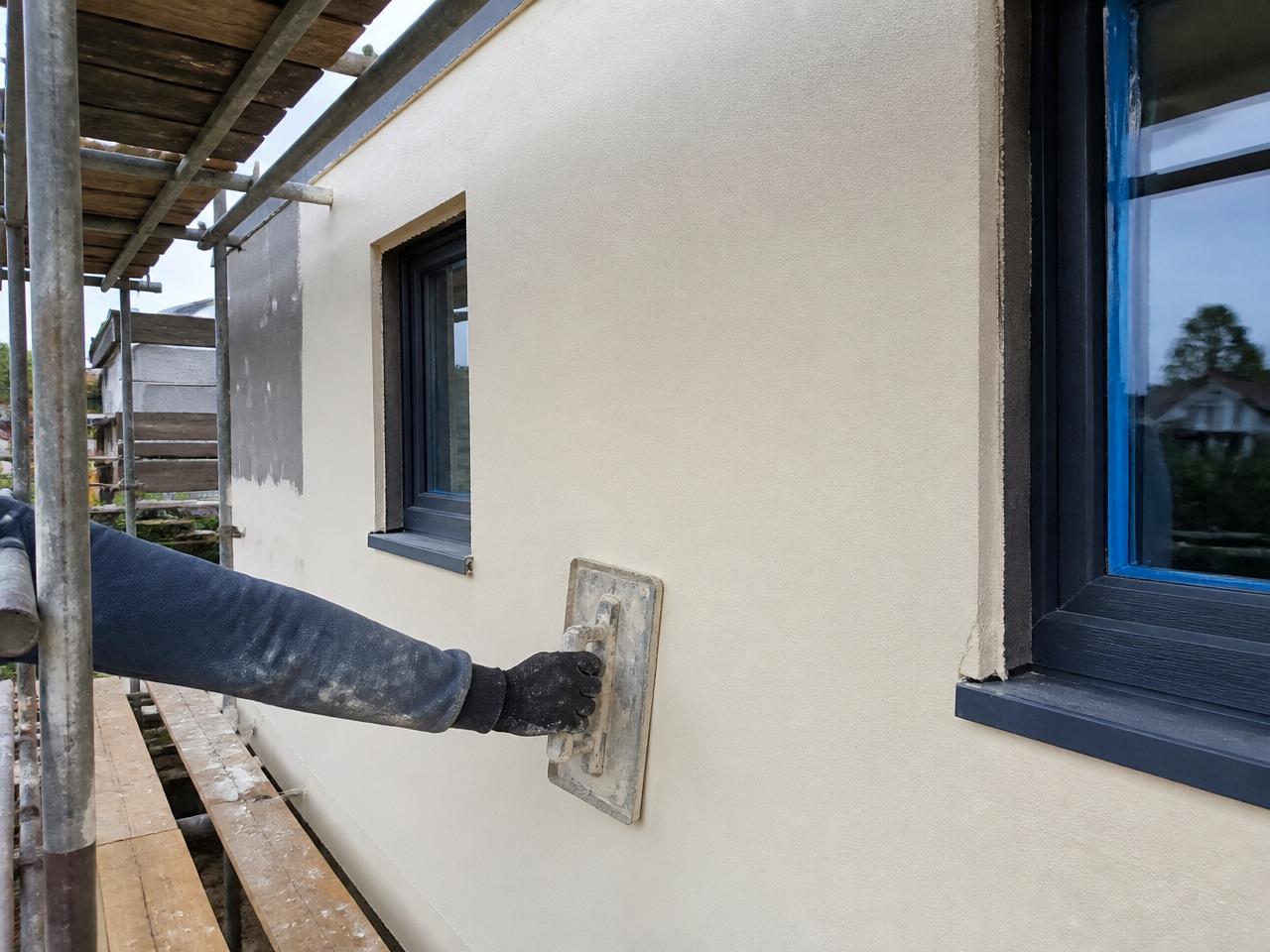
- Reinforced basecoat and mesh, primer, then a silicone or acrylic thin-coat render finish.
- Roof line, eaves and rainwater goods adjusted so the new build-up is weathertight.
Budgeting honestly
A grant reduces the cost; it does not remove it. The homeowner contribution depends on wall area, the number of openings, access, scaffolding, whether the existing render has to come off and how much remedial work the survey uncovers. We price from a site visit rather than a rate per square metre quoted over the phone, and we set out what the grant is expected to cover so there are no surprises at the end.
Frequently asked questions
- How much is the SEAI grant for external wall insulation?
- The grant value is set by SEAI and varies by property type, and the figures are revised periodically. Check the current amounts on seai.ie for your house type before you budget, and confirm them again at application stage.
- Can any builder do SEAI grant work?
- No. To qualify for a grant the works must be carried out by a contractor registered with SEAI for that measure, and the process includes a BER assessment. Using an unregistered contractor means the grant will not be paid.
- Do I apply before or after the work?
- Before. Under the individual grant route the application must be approved before work begins; you pay the contractor and claim afterwards. Under a One Stop Shop the provider handles the application and nets the grant off your invoice.
- Will external insulation cause damp?
- Correctly specified and detailed, external insulation usually reduces condensation risk by keeping the wall warmer. Problems come from unresolved existing damp, poor reveal and cill detailing, or insufficient ventilation after the house is tightened — all of which should be dealt with in the survey.
- Is there help if I cannot afford the contribution?
- SEAI's Warmer Homes Scheme provides free energy upgrades to eligible households receiving certain welfare payments. Eligibility criteria and the application process are published by SEAI.
Official Irish sources
- SEAI — Home energy grants
- SEAI — One Stop Shop service
- SEAI — Warmer Homes Scheme
- NSAI Agrément certification
Rules, grant values and rates change. This article is general information, not professional advice — confirm the current position with the relevant body or your own architect, engineer or surveyor.