
Short answer
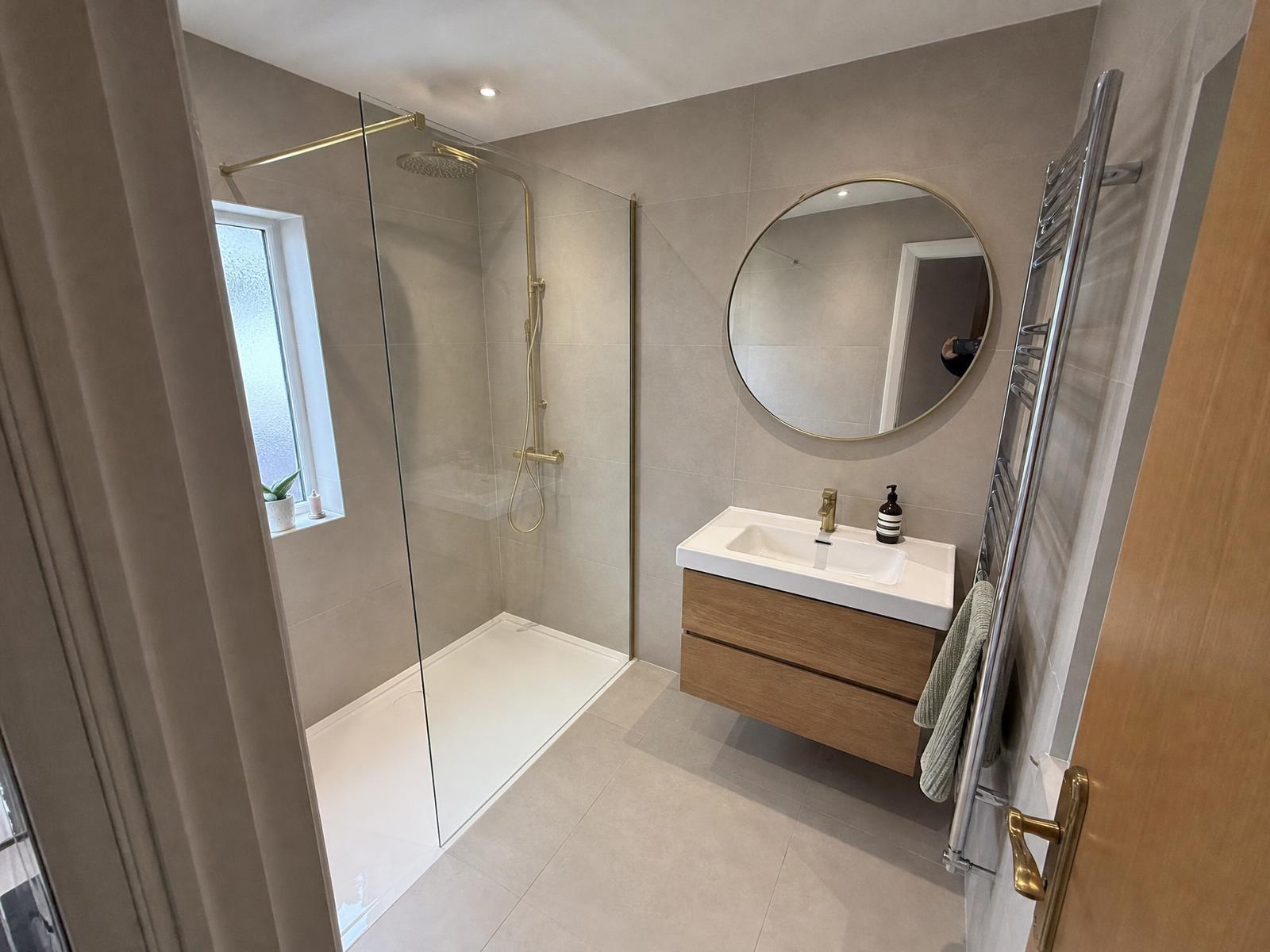
In 2026 most full bathroom renovations in Dublin fall roughly between €9,000 and €20,000 including VAT, with compact en-suites at the lower end and larger family bathrooms with walk-in showers, full-height tiling and underfloor heating at the upper end. The final price depends mainly on room size, how much plumbing moves, the condition of floors and walls once stripped, and the sanitaryware and tiles you choose. The only reliable figure is a written, itemised quote after a site visit.
Key points
- Typical Dublin range: about €9,000–€20,000 incl. VAT for a full renovation.
- Moving the toilet or shower is the biggest single cost driver.
- Most bathrooms take two to three weeks on site once materials are ready.
- Always budget a 10% contingency for rot, old pipework or uneven floors.
- Wet areas must be tanked (waterproofed) before tiling — never skip it.
What is included in a full bathroom renovation
A full renovation normally covers strip-out and disposal, first-fix plumbing and electrics, any floor or wall repairs, waterproofing (tanking) of wet zones, plastering or boarding, tiling, second-fix installation of sanitaryware, extractor fan, lighting and final finishing.
Quotes that look cheap often leave out tanking, skip hire, making good, or the electrical certificate. Ask for each item to be listed separately so you can compare like with like.
The factors that change the price
- Layout changes — relocating a toilet soil pipe or shower waste adds labour and sometimes floor work.
- Wet room or walk-in shower — needs a fall to the drain, full tanking and a level-access tray or screed.
- Tile area and format — full-height or large-format porcelain takes longer to set out and lay.
- Sanitaryware and fittings — a mid-range suite vs. designer brassware can differ by thousands.
- Underfloor heating, heated towel rails and concealed cisterns add both material and fitting time.
- Condition found after strip-out — rotten joists, lead or galvanised pipes and uneven walls are common in older Dublin houses.
VAT, electrics and regulations
Renovation labour and materials in Ireland are generally subject to VAT at the reduced rate for construction services; check the current rate on Revenue.ie and make sure your quote states whether VAT is included.
Electrical work in a bathroom must be carried out by a registered electrical contractor, who will issue a certificate on completion. Ventilation should meet Part F of the Building Regulations so the new room does not suffer from condensation and mould.
How to get an accurate quote
Send clear photos and rough measurements first, then book a site visit. A good contractor will check the floor, the water pressure, the position of the soil stack and the ventilation route before pricing. Agree the schedule of works, payment stages and a fixed start date in writing.
Phoenix Maco Ltd prices bathrooms across Dublin from photos and a site visit, with an itemised written quote and one team handling plumbing, tiling and finishing.
Frequently asked questions
- How much does a small en-suite cost to renovate in Dublin?
- A compact en-suite with a like-for-like layout is usually at the lower end of the range, often from around €9,000 including VAT, depending on finishes and the condition found after strip-out.
- How long does a bathroom renovation take?
- Most bathrooms take two to three weeks on site. Wet rooms, layout changes or structural repairs can add a week or more.
- Can I use my bathroom during the work?
- Not usually for the main phase. If it is your only bathroom, plan temporary arrangements or ask for the toilet to be reconnected overnight where practical.
- Is a wet room more expensive than a standard shower?
- Yes. A wet room needs a sloped floor, full tanking and careful drainage, so it typically costs more than a standard tray and enclosure.
- Do I need planning permission for a bathroom renovation?
- No. Internal bathroom renovations do not normally need planning permission, but the work must still comply with the Building Regulations, and electrical work must be certified.
Official Irish sources
- Revenue — VAT rates database
- Safe Electric — Registered Electrical Contractors
- Department of Housing — Building Regulations technical guidance
- CCPC — Getting work done on your home
Rules, grant values and rates change. This article is general information, not professional advice — confirm the current position with the relevant body or your own architect, engineer or surveyor.